
Sharpening Industry Technical Glossary: Essential Terms and Edge Science Explained
I. Introduction: The Language Behind Sharpness
The sharpening industry is built upon precision, technique, and a deep understanding of steel behavior. Whether you are a professional sharpener, a knife manufacturer, or a serious enthusiast, mastering sharpening terminology is essential. These terms describe the micro-mechanics of edge formation, abrasive behavior, bevel geometry, and the scientific principles that shape a blade’s sharpness. This glossary provides an extended overview of the technical language used across the sharpening world.
II. Core Edge Terminology
Apex
The apex is the microscopic line where the two bevels meet. True sharpness is determined by how clean, aligned, and burr-free this line is. A refined apex cuts effortlessly and maintains edge retention longer.
Bevel
The angled surface ground onto the blade. Variations include primary bevel, secondary bevel, compound bevel, flat bevel, convex bevel, and hollow bevel. Bevel geometry determines cutting performance, durability, and ease of sharpening.
Burr
A thin fold of metal raised at the edge during sharpening. The burr indicates contact at the apex, but must be removed properly to avoid weak or rolled edges.
Micro-Bevel
A small secondary bevel added at a slightly steeper angle to reinforce the edge. Micro-bevels improve edge stability, help prevent chipping, and reduce sharpening time.
Apex Stability
A measurement of how well the edge resists rolling or deformation. High stability depends on proper heat treatment, bevel symmetry, and refined finishing.
III. Abrasive and Stone Terminology
Abrasive Hardness
The relative hardness of abrasive materials such as aluminum oxide, silicon carbide, ceramic, and diamond. Harder abrasives cut faster and maintain performance over time.
Abrasive Wear Resistance
The durability of a stone or plate under repeated sharpening. High wear resistance ensures consistent results and reduces flattening frequency.
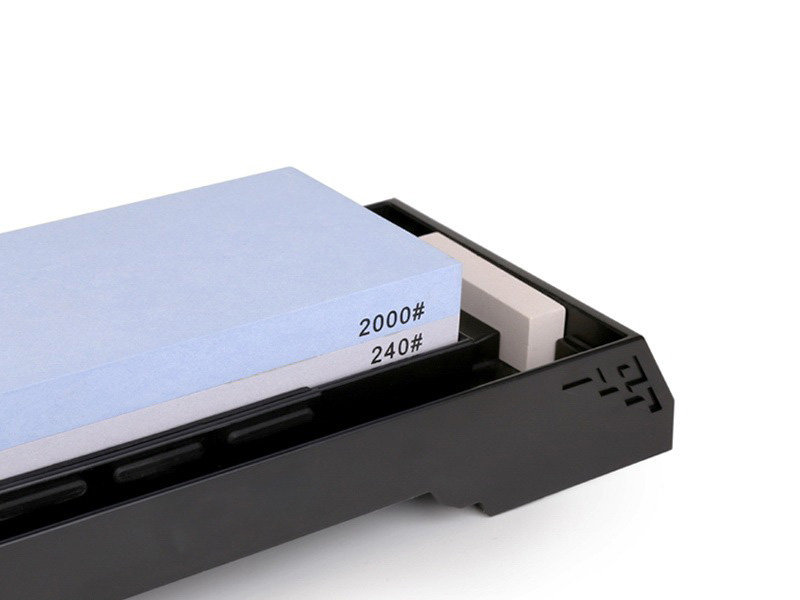
Grit
The size of abrasive particles. Lower grits reshape and repair edges, while higher grits polish and refine the blade to razor sharpness. Grit consistency is crucial for predictable performance.
Slurry
A mixture of abrasive particles and metal removed during sharpening, especially on water stones. Slurry enhances polishing and reduces deep scratches.
Lapping
The process of flattening or resurfacing a sharpening stone using a harder abrasive plate, typically diamond. Lapping restores precision, ensuring even sharpening across the surface.
Stone Resurfacing
Repairing or re-leveling the surface of a stone after wear or dishing. This is essential for maintaining accurate blade geometry.
IV. Sharpening Technique Terminology
Honing
A lighter form of sharpening that realigns the edge without removing significant material. Honing maintains sharpness between full sharpening sessions.
Grinding
The aggressive removal of metal using coarse abrasives. Used for repairing chips, reshaping bevels, and restoring severely dull edges.
Polishing
The final stage of sharpening, where fine abrasives create a smooth, mirror-like finish. Polished edges deliver cleaner cuts with less resistance.
Micro-Polishing
A high-precision refinement step targeting the final microns of the apex. This technique improves cutting smoothness and prolongs edge retention.
Stropping
Finishing with leather or fabric loaded with polishing compounds. Stropping removes micro-burrs and elevates sharpness to its maximum potential.
Angle Control
Maintaining a consistent sharpening angle across the entire length of the blade. Proper angle control produces uniform bevels and enhances edge performance.
V. Edge Geometry Terminology
Flat Grind
A straight, flat bevel suited for kitchen knives and woodworking tools. Provides predictable cutting action and easy maintenance.
Hollow Grind
A concave bevel produced by wheel grinding. Creates a keen but delicate edge, commonly used in razors and fine cutting tools.
Convex Edge
A rounded bevel that prioritizes durability. Ideal for outdoor, bushcraft, and heavy-duty knives where edge strength is critical.
Bevel Alignment
The accuracy and symmetry of bevel angles on both sides of the blade. Proper alignment ensures cutting efficiency and apex stability.
VI. Metal Behavior Terminology
Chip Formation
Small pieces of metal breaking off the edge due to excessive hardness, wrong sharpening angle, or poor steel toughness. Understanding chip behavior helps adjust technique.
Metal Debris Removal
The clearing of metal filings during sharpening. Clean abrasives cut more efficiently and prevent glazing.
Edge Retention
The blade’s ability to maintain sharpness over time. Influenced by steel composition, heat treatment, bevel angle, and finishing quality.
VII. Conclusion: Mastering the Language of Sharpening
Understanding sharpening terminology unlocks a deeper level of precision and performance. Whether evaluating stones, refining technique, or communicating with suppliers and customers, these terms form the foundation of professional sharpening knowledge. With proper technique and high-quality tools, achieving a clean, stable, razor-sharp edge becomes not only possible but repeatable.
压缩-300x168.png)